As electric vehicles (EVs) evolve to deliver higher power density, efficiency, and compact designs, one challenge remains largely unseen—partial discharge (PD) in motor insulation systems. PD is a localized electrical breakdown that does not immediately cause failure, but over time, leads to insulation degradation, unexpected motor breakdowns, and expensive downtime.
What Are Adjustable Speed Drives, IGBT-Based PWM Inverters, and Their Impact on Motor Insulation?
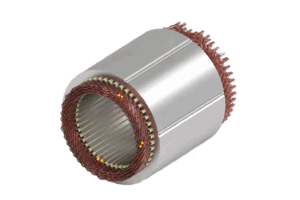
Modern electric vehicles rely on adjustable speed drives (ASDs), also known as variable frequency drives (VFDs), to control motor speed and torque efficiently. These drives include a crucial component called a pulse-width modulation (PWM) inverter, often built using insulated-gate bipolar transistors (IGBTs), which converts DC battery power into AC with precisely controlled voltage and frequency.
While PWM inverters enable efficient motor operation, the use of IGBTs introduces fast switching frequencies and steep voltage rise times (high dv/dt), which create electrical stresses that challenge motor insulation systems. These stresses significantly increase the risk of partial discharge within motor windings, especially as application voltages and switching speeds continue to rise.
Why is PD a Growing Concern in EV Motors?
Unlike traditional AC motors, EV motors driven by PWM inverters experience:
- Uneven voltage distribution across motor windings, leading to insulation breakdown.
- Higher likelihood of PD inception under fast switching transients compared to sinusoidal AC voltages.
- Accelerated insulation aging as PD activity increases with switching frequency and dv/dt.
Studies show that under PWM voltage, PD does not behave the same as it does under AC supply. PD pulses often occur near switching events, making traditional offline or sinusoidal AC-based testing insufficient for real-world insulation assessment.

Why is Traditional PD Detection & Measurement Challenging Under PWM?
Detecting PD in PWM-driven motors is technically demanding due to:
- Switching noise masking PD signals: The electrical noise generated by fast inverter switching is often orders of magnitude stronger than PD pulses.
- Sensor limitations: Conventional electrical or acoustic PD sensors can become saturated or fail to distinguish PD from switching transients.
- Limited visibility of internal defects: Some detection methods require controlled environments or cannot detect PD occurring inside insulation layers.
Researchers are exploring advanced filtering, high-pass UHF antennas, and optical methods to overcome these limitations, but each comes with constraints in practicality, cost, and implementation complexity.
A Unique Approach: UV Imaging for PD Detection
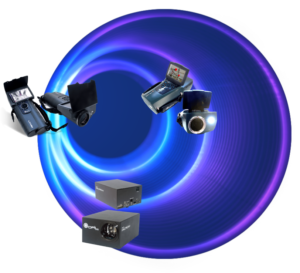
Unlike electrical sensors, UV cameras detect the ultraviolet light emitted by corona and surface PD discharges – a method immune to electromagnetic interference from inverter switching. Solar-blind UV cameras:
- Bypass switching noise completely, delivering clear, unambiguous detection results.
- Provide visual pinpointing of discharge locations, aiding in targeted repairs and condition assessments.
- Operate effectively in daylight and do not require system shutdowns or blackout tests.
UV imaging provides a powerful, non-contact method for identifying surface and corona PD – critical for preventing early-stage insulation degradation.

Moving Forward
With the shift towards high-voltage, fast-switching powertrains in EVs, PD detection is no longer optional. Integrating reliable, noise-immune detection tools like UV cameras alongside electrical measurement systems offers manufacturers a more complete insulation health assessment strategy.