In the digital era, data centers have become an essential infrastructure, supporting critical services such as cloud computing, artificial intelligence, financial transactions, and public-sector operations. As operators expand capacity and deploy increasingly power-intensive workloads, electricity consumption is rising sharply. This places significant pressure on the entire electrical infrastructure, from incoming utility feeds and HV transformers to switchgear, circuit breakers, cables, generators and UPS systems.
In the United States alone, data centers accounted for approximately 4.4% of total electricity consumption in 2023, with projections suggesting this could rise to 6.7–12% by 2028 (U.S. Department of Energy). Modern facilities consume up to 50 times more electricity per square foot than conventional buildings, making uninterrupted power supply both a technical and strategic priority.
The Expanding Power Footprint of Data Centers
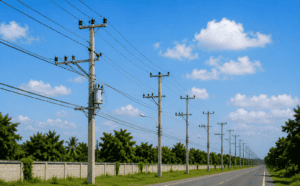
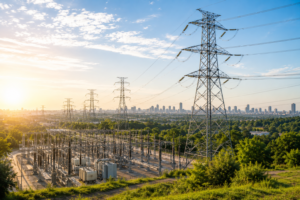
At the core of a data center’s electrical infrastructure lies a complex sequence of high-voltage and medium-voltage systems designed to reliably step down, distribute, and condition power. Utility-scale high-voltage lines feed on-site substations and large step-down transformers, often custom-built with long procurement lead times. These transformers convert power from 138–345 kV to medium-voltage levels (typically 11–33 kV). From there, MV switchgear distributes power to transformers feeding LV switchgear, PDUs, and eventually racks of IT equipment.
Critical components along this path include:
- HV and MV Transformers, which serve as the backbone of voltage conversion.
- MV Switchgear and Circuit Breakers, providing controlled distribution and protection.
- High-Voltage Cables and Busbars, connecting assets across long distances and high current loads.
- LV Systems and UPS Modules, ensuring short-term power stability and clean switchover
- Generators, providing long-duration backup power during utility outages and forming the foundation of redundant power architecture.
The Role of AI in Driving Power Demand
A major contributor to the accelerating electricity demand is the rapid growth of AI workloads. Training large-scale AI models and running inference at scale require massive computing resources, often relying on high-density GPUs or specialized AI accelerators that draw significantly more power than traditional CPUs. AI-driven applications such as generative models, real-time analytics, and autonomous decision-making systems are now deployed across sectors, further increasing the energy intensity of data centers.
As AI adoption grows, so does the need for robust and scalable power infrastructure capable of supporting higher densities and continuous uptime.
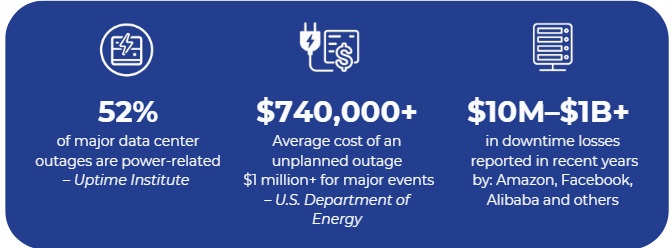
In this context, the reliability of the entire electrical backbone—including on-site substations, HV and MV transformers, switchgear, circuit breakers, cables, generators and UPS systems—becomes not only a technical concern but a business-critical priority. Failures at any point in the power chain can result in service outages, equipment damage, and substantial financial losses.
This growing threat highlights the need for joint resilience planning between utilities and data center operators, along with smarter, predictive maintenance practices to reduce preventable failures and ensure power continuity in an increasingly AI-driven world.
The High Cost of Power Failures in Data Centers
Predictive Maintenance: A Frontline Defense
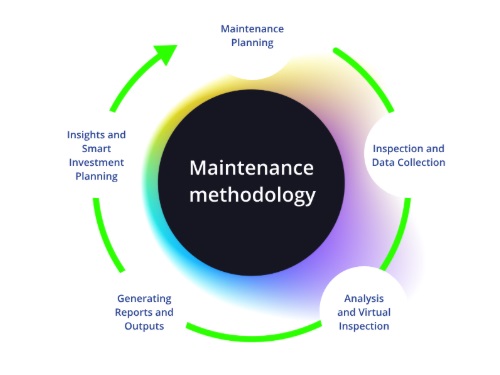
While long-term grid resilience is essential, predictive maintenance of on-site electrical systems offers the most immediate and cost-effective defense. Traditional inspections are no longer sufficient in an environment where even minutes of downtime can cost hundreds of thousands or even millions of dollars.
Predictive strategies use advanced diagnostics to detect emerging faults before they escalate. Among the most critical indicators are partial discharge (PD) and arcing activity, both early signs of deterioration in high-voltage and medium-voltage systems.
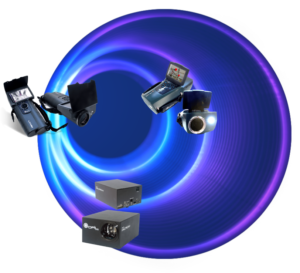
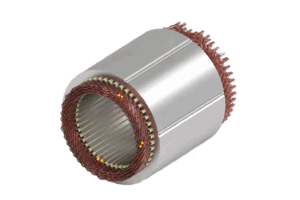
This is where OFIL’s solar-blind UV cameras come into play. Unlike thermal imaging, which detects issues only after heat has built up, OFIL’s cameras reveal PD and arcing in their earliest stages. They work in full daylight and without requiring any equipment shutdown. In generators, the cameras can identify insulation degradation and faults in windings, supporting uninterrupted generator availability during utility failures.
When combined with OFIL’s Gridnostic platform, operators gain a powerful diagnostic ecosystem that:
- Assigns severity scores and trends based on historical and multi-sensor data.
- Supports prioritized maintenance planning and resource allocation.
- Helps reduce risk and extend asset life.
Conclusion: Preventing the Avoidable
As digital infrastructure continues to grow, the tolerance for unplanned downtime shrinks. Substations and other HV/MV components, such as switchgear, transformers, cables, and generators are both critical vulnerabilities and strategic opportunities.
By adopting predictive inspection technologies like OFIL UV cameras and the Gridnostic platform, data center operators gain early fault detection, continuous condition monitoring, and actionable insights that protect both uptime and reputation.
In a world where power stability is mission-critical and outages can cost millions; proactive substation management is no longer optional – it’s essential.