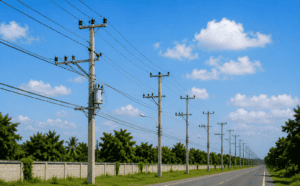
The global expansion of 765kV transmission infrastructure is accelerating as utilities seek new ways to move larger amounts of power across long distances, connect remote renewable resources, and support rapidly growing electricity demand.
Much of this growth is being driven by electrification, hyperscale data centers, industrial expansion, and the integration of large-scale renewable energy resources.
These ultra-high-voltage projects often represent investments of hundreds of millions or even billions of dollars. Yet despite the scale of these investments, some of the issues that ultimately affect reliability can originate from surprisingly small defects.
At 765kV, electrical stresses are so high that minor imperfections that would be insignificant on lower-voltage systems can become sources of corona and partial discharge activity. A damaged fitting, improperly installed grading ring, transportation damage, or a slight assembly deviation may create localized electric field concentrations that only become apparent once the asset is energized.
The challenge is that many of these defects cannot be identified through conventional visual inspections alone.
The Commissioning Gap
Modern 765kV projects undergo extensive engineering reviews, factory testing, quality assurance procedures, and construction inspections. However, the period between final installation and initial energization remains one of the most critical and often underestimated phases in the entire asset lifecycle.
Commissioning represents the first time that every component in the system is exposed to actual operating electrical stress.
While construction inspections can confirm that equipment has been assembled according to drawings and specifications, they cannot always verify how the installed asset will behave electrically under full operating voltage. At 765kV, the electrical field itself becomes a critical part of system performance.
Small installation deviations, improperly oriented grading rings, missing hardware, incorrect clearances, damaged components, manufacturing defects, or minor geometric variations can significantly alter local electric field distribution. These issues may pass visual inspection, dimensional verification, and mechanical acceptance testing without raising concerns.
Only when the system is energized does the electrical field fully develop, allowing hidden weaknesses to reveal themselves through corona and partial discharge activity.
In many cases, corona is not the defect itself – it is the first visible indication of an underlying problem. A component may have been installed incorrectly, damaged during transportation, manufactured outside specification, or assembled in a way that creates excessive electrical stress concentrations. These conditions often remain invisible until operating voltage is applied.
Utilities worldwide have encountered commissioning-stage issues such as reversed grading rings, missing grading rings, defective spacer batches, improperly installed hardware, incorrect conductor geometries, damaged fittings, and assembly errors that successfully passed conventional inspections but became immediately visible once the asset was energized.
For this reason, energization serves as the first full-scale electrical validation of the entire installation.
This challenge extends beyond transmission lines themselves. 765kV substations are among the most critical assets in the transmission network, concentrating massive amounts of power within a relatively compact footprint. During commissioning, components such as bushings, disconnectors, circuit breakers, busbars, connectors, and insulators are exposed to operating electrical stresses for the first time.
Detecting corona and partial discharge activity at this stage allows utilities to identify hidden installation defects, assembly errors, and manufacturing issues before the facility enters commercial service.
The financial implications are significant. Issues discovered during commissioning are typically far less expensive to correct than those identified months or years later. Once a line or substation enters commercial operation, corrective actions become more complicated, outages become more costly, and responsibility between contractors, suppliers, and asset owners may be more difficult to establish.
A single issue identified and corrected during commissioning may cost only a fraction of what it would cost to diagnose and remediate after the asset enters commercial service, when outages, mobilization costs, and operational constraints must also be considered.
As a result, many utilities are placing greater emphasis on technologies that can verify the electrical performance of installed assets before final project handover.
Beyond technical validation, commissioning inspections can also provide an important layer of contractor acceptance and warranty verification. Identifying abnormal corona or partial discharge activity before final handover allows utilities to address installation errors, manufacturing defects, or construction-related issues while responsibility remains clearly assigned to contractors and equipment suppliers. Detecting these problems before the asset enters commercial service can significantly reduce future disputes, simplify corrective actions, and help ensure that the infrastructure meets its intended performance and reliability requirements from day one.
In many respects, commissioning represents the last opportunity to identify and correct electrical performance issues before they become the utility’s operational responsibility.
Seeing What Conventional Inspections Miss
Corona and partial discharge are often among the earliest indicators of developing electrical problems.
Unlike thermal anomalies, which typically appear after significant deterioration has already occurred, corona activity can reveal elevated electrical stress at a much earlier stage. This provides utilities with a unique opportunity to identify and address problems before they evolve into failures, outages, or accelerated asset degradation.
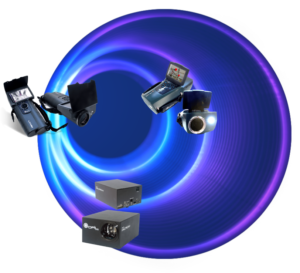
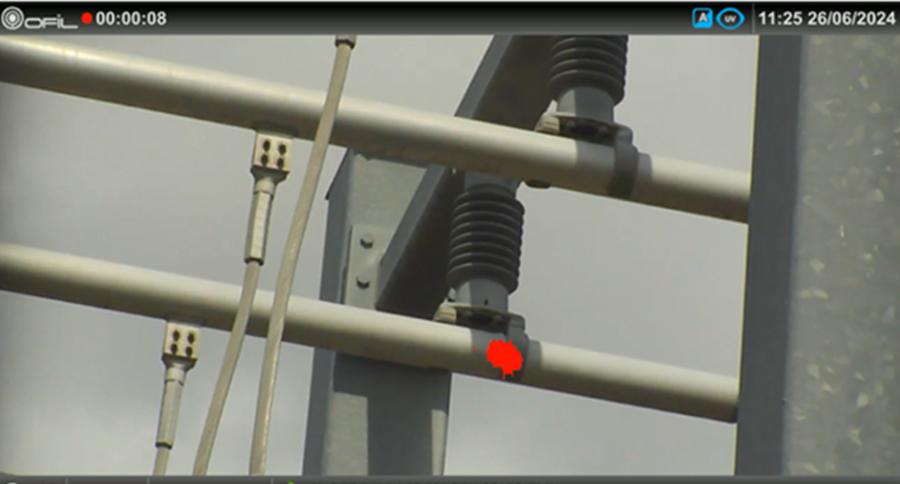
Solar-blind ultraviolet imaging enables inspection teams to directly visualize corona and partial discharge activity on energized transmission and substation assets during daylight operation.
This capability provides an additional layer of validation during commissioning by helping teams identify defects that may otherwise remain hidden until they develop into larger reliability concerns. Rather than relying solely on visual acceptance criteria, utilities can verify actual electrical performance under operating conditions and address abnormal discharge activity before the asset enters long-term service.
Partial Discharge due to improperly installed fitting on busbar, detected during substation inspection with UV camera.
Building a Baseline for the Future
The value of commissioning inspections extends far beyond immediate defect identification.
A comprehensive corona inspection performed during initial energization creates a documented baseline of asset condition. Future inspections can then be compared against this reference point to identify emerging deterioration, contamination effects, hardware aging, environmental influences, or changes in electrical performance over time.
As utilities continue investing in digital asset management, predictive maintenance, and condition-based monitoring strategies, this baseline becomes increasingly valuable for prioritizing maintenance activities and supporting long-term reliability planning.
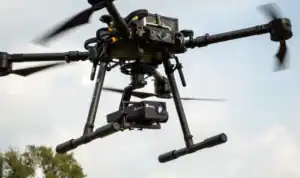
Within substations, the commissioning baseline can later support fixed monitoring systems, robotic inspection programs, and AI-driven asset management platforms, enabling utilities to track changes in asset condition and detect developing problems long before they impact reliability.
Looking Beyond Construction
For utilities investing hundreds of millions of dollars in new transmission infrastructure, commissioning is increasingly viewed not simply as a project milestone, but as a critical opportunity to validate asset quality, verify contractor performance, establish future maintenance baselines, and reduce long-term operational risk.
As 765kV transmission lines and substations continue expanding worldwide, utilities are increasingly recognizing that project success is not measured solely by completing construction on time or within budget.
Long-term reliability begins at energization.
The ability to identify and correct hidden electrical defects before they become operational problems can significantly improve asset performance throughout the life of the transmission system. For ultra-high-voltage infrastructure, finding small problems before they become large ones is often one of the most cost-effective reliability investments a utility can make.
In an era of growing transmission investments, increasing power demand, and rising expectations for grid reliability, commissioning is no longer simply the final step before handover – it is increasingly becoming the first step in a long-term reliability strategy.