Find Corona Faults
Before They Find You
Detect corona discharge and partial discharge on live HV assets —
in full daylight, without shutting down a single line.
OFIL’s DayCor® cameras provide daylight UV corona detection and integrated inspection analytics designed specifically for medium and high-voltage utility environments. Optimize grid reliability with precise, safe, non-contact diagnostic technology.
The Challenge of Early Fault Detection in High-Voltage Utilities
Modern electrical grids are operating under unprecedented pressure. The convergence of aging infrastructure, aggressive grid expansion, and surging load demands fundamentally alters the operational limits of legacy components. :
- Insulation Breakdown: Progressive carbon tracking and erosion of housing insulating materials.
- Equipment Damage: Irreversible damage to hardware, requiring costly complete replacements rather than targeted repairs.
- Unplanned Outages: Flashovers resulting in critical grid downtime and negative SAIDI/SAIFI metrics.
- Safety Risks: Hazardous conditions for substation personnel and line crews.
-
Stage 1 — Detectable now with UV
Corona discharge begins. UV photons emitted. DayCor® detects it here — before any heat signature exists. -
Stage 2 — Partial discharge intensifies
Surface degradation accelerates. Ozone and nitric acid corrode insulation. Thermal cameras begin to pick up faint heat. -
Stage 3 — Failure imminent
Significant heat generated. IR cameras now clearly see the fault. Severe structural damage has already occurred.
Why Thermal Imaging Alone Is Not Enough
While infrared (IR) thermography is a standard tool for utility maintenance, it relies entirely on detecting resistance-driven heat. Electrical discharge, however, is a voltage-driven phenomenon. Many utilities now combine UV and thermal inspection to achieve full, comprehensive asset coverage.
- Detects electrical discharge and ionization in broad daylight.
- Identifies early-stage insulation degradation before thermal signatures exist.
- Requires line voltage to be present, but is independent of current load.
- Perfect for pinpointing specific surface anomalies on complex substation and powerline systems arrays.
- Detects heat signatures caused by high resistance connections.
- Highly effective for identifying late-stage faults and loose connections.
- Requires high current load flowing through the asset to generate detectable heat.
- Fails to detect surface ionization (corona discharge) before critical internal damage occurs.
Why DayCor®
The UV Advantage for HV Inspection
Works in full daylight
The solar-blind UV filter eliminates background UV noise entirely — only man-made corona discharge is visible. No dark conditions, no shutdowns, no delays.
Unlike earlier UV cameras, DayCor® solar-blind technology operates on live lines under full sunlight.
Catches faults earlier
UV detects corona discharge before heat builds up — catching what IR cameras miss until failure is imminent. Stop problems at Stage 1, not Stage 3.
Corona appears in 94 of every 100 high-quality utility inspection inquiries — the pain is universal and acute.
EPRI-validated
Built on Electric Power Research Institute research and guidelines. Trusted by utilities globally for condition-based maintenance programs.
Not a new technology — a proven one. The same UV detection principles that utility engineers rely on for critical decisions.
From Detection to Decision
Integrated diagnostic ecosystems that transform raw UV photons into actionable maintenance intelligence.
01
Detection
Camera registers UV-C photons from grid asset. Detects UVC photons emitted from grid assets due to corona partial discharge activity.
02
Data Collection
Videos, Images, GPS coordinates, and photon countsare logged.
03
Severity Assessment
Gridnostic software quantifies fault magnitude against baseline parameters.
04
Prioritization
Criticality matrix assigns repair urgency.
05
Maintenance Planning
Work orders generated; predictive schedules updated.
Integration with Gridnostic™ - for Reliable Grid Performance

DayCor® UV Corona Cameras
A complete range from handheld patrol cameras to UAV-mounted systems and compact camera cores for integrated workflows.
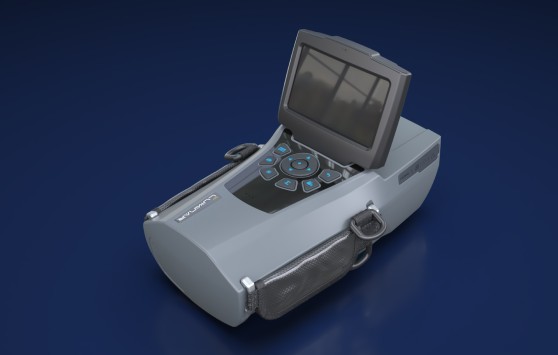
DayCor® UVollé-X compact handheld UV corona cameras for daytime inspections of electrical apparatuses in/outdoors, with special emphasis on ergonomic design and ease of operation.
DayCor® Luminar HD Solar Blind UV Camera is a handheld solution specifically designed to detect and pinpoint corona PD and arcing – a major but often unseen hazard to electrical equipment.
DayCor® micROM HD Solar Blind UV Camera is a UAV solution specifically designed to detect and pinpoint corona PD and arcing – a major but often unseen hazard to electrical equipment.
Solar Blind UV Camera is a camera core for OEM integration, specifically designed to detect and pinpoint corona PD – a major but often unseen hazard to electrical equipment.
Gridnostic is OFIL’s smart powerline inspection software, Built to turn RGB, thermal and UV (corona discharge) inspection images into clear, actionable insights.
Frequently asked questions
What is the best way to detect corona discharge in substations?
The most effective method for detecting corona discharge in substations is using daylight-capable UV cameras. These devices capture the UV-C spectrum emitted by the ionization of air surrounding high-voltage components. This allows inspectors to pinpoint the exact location of electrical stress without de-energizing the equipment.
Can thermal imaging detect early-stage partial discharge?
No, thermal imaging is generally ineffective for detecting early-stage partial discharge. Corona discharge is a voltage-driven phenomenon that emits ultraviolet light but generates negligible heat in its initial stages. By the time a thermal camera detects a temperature anomaly, the fault has typically progressed to a severe, current-driven stage.
Can corona detection be performed during daylight?
Yes, provided the equipment uses solar-blind technology. True solar-blind UV cameras filter out background solar radiation in the UV-C band, allowing inspectors to clearly see the faint photon emissions of corona discharge even in full, direct sunlight.
What types of assets benefit from UV corona inspection?
Primary beneficiaries include polymer, and porcelain and glass insulators, transformer bushings, conductors, switchgear, corona rings, stator windings, and high-voltage transmission hardware. Any component susceptible to insulation breakdown or surface contamination is an ideal candidate for UV inspection.
Can UAV systems detect corona on transmission lines?
Absolutely. Lightweight, gimbal-mounted UV cameras can be integrated with commercial UAVs (drones) to inspect hard-to-reach transmission lines. This provides high-resolution, close-proximity detection of hardware defects and insulator degradation without the cost of helicopter flights.
How does inspection software support asset management?
Inspection software aggregates raw UV detection data into centralized databases. It enables asset managers to track defect progression over time, overlay historical inspections, generate compliance reports, and transition from reactive repairs to predictive maintenance strategies.
Trusted by Global Leaders