Corona Partial Discharge Detection with UV Cameras
See corona partial discharge on energized assets in full daylight, before it becomes a failure
Corona partial discharge is a localized electrical discharge that ionizes the air around a component and emits ultraviolet light. It is invisible to the eye, it signals a developing fault, and it damages equipment over time. A partial discharge camera, also called a corona discharge camera, captures the narrow UV band that corona emits and overlays it on a visible image. That makes corona discharge detection possible on energized equipment, in full daylight, without taking a line out of service.
- Since 1993: pioneers of solar blind UV inspection
What is Corona Partial Discharge?
Corona partial discharge occurs when a strong electric field ionizes the air surrounding a component, creating a localized discharge that emits ultraviolet (UV) light. Although invisible to the human eye, these UV emissions can be captured using OFIL’s solar blind UV technology. Detecting corona PD early allows operators to identify developing issues before they escalate, supporting more reliable and proactive maintenance strategies.
Corona PD as a warning signal
- Corona partial discharge acts as a critical warning signal, indicating the presence of malfunctions in equipment.
- It often appears where electrical stress is concentrated: sharp edges, loose or damaged components.
- Root causes include design issues, poor installation, contamination, or manufacturing defects.
- Detection of corona PD can alert maintenance teams to these points before they escalate into major faults.
Corona PD as a damaging force
- Beyond signaling potential issues, corona PD is inherently destructive.
- It produces ozone, nitric acid and oxalic acids which damage electrical components.
- The result is premature equipment failure unless the discharge is detected and mitigated.
Corona Partial Discharge, Seen and Measured
Images captured with DayCor® cameras: corona activity on energized components, and the damage it leaves behind.
Corona PD indicating the presence of malfunctions


Damages to components caused by corona PD


How UV and Thermal Imaging Work Together
Partial discharge is voltage driven, not heat driven. A thermal camera sees a fault once it generates measurable heat, which in many cases is a later stage. A solar blind UV camera shows voltage stress and corona activity in daylight, on energized assets, often before any heating develops.
Neither technology replaces the other. UV and thermal imaging respond to different failure mechanisms and are complementary: UV reveals stress before heating, thermal confirms resistive damage.
UV Corona Detection
- Detects corona and surface partial discharge in full daylight.
- Not load dependent: reveals voltage stress even at low current.
- Typical detection stage: early to mid stage, before heating develops.
- Pinpoints the discharge source on insulators, hardware and conductors.
Infrared (Thermal) Imaging
- Detects resistive heating from high resistance connections and overload.
- Quantifies heating and confirms resistive damage.
- Requires sufficient load flowing through the asset to generate detectable heat.
- Typical detection stage: mid to late stage.
What is a Partial Discharge Camera?
Corona Discharge Detection with a Solar Blind UV Camera
Works in full daylight
DayCor® solar blind technology filters out solar radiation, so only real discharge is visible. No shutdown, no darkness.
Conventional UV cameras need low light or night conditions. DayCor® cameras capture the UVC band, 240 to 280 nm, where sunlight is blocked by the atmosphere, and overlay the UV signal on a visible image.
Catches faults earlier
UV detection comes before heat builds up, giving you time to plan repairs.
Corona PD is generally detected in the initial stages of an issue, prior to a critical failure, when a repair is still targeted and inexpensive.
Certified sensitivity
Each DayCor® camera has a minimum discharge detection figure. For the models below it is tested and certified by the Eurotest laboratory.
UVollé detects 1 pC at 12 m, Luminar HD 1 pC at 15 m, micROM HD 1 pC at 8 m, UV Eye 1 pC at 15 m and UV EyeScope 1 pC at 8 m. Working distance depends on environmental conditions and PD intensity.
From Detection to Decision
Integrated diagnostic ecosystems that transform raw UV photons into actionable maintenance intelligence. DayCor® cameras work on their own; Gridnostic is an optional platform for teams that want to manage and analyze their inspection data.
Detection
The camera registers UV-C photons emitted by corona on the asset.
Data Collection
Video, stills, GPS coordinates and photon counts are logged.
Severity Assessment
Optional: Gridnostic scores the fault against baseline parameters.
Prioritization
A criticality matrix assigns repair urgency.
Maintenance Planning
Work orders are issued and schedules updated.
Integration with Gridnostic™ for Reliable Grid Performance

Partial Discharge Detection Products
A complete range from handheld PD cameras to UAV mounted systems and camera cores for fixed and OEM installations. Choose by how you inspect: on foot, from the air, or continuously. Not sure which camera fits your inspection? See the DayCor® camera selection guide.
DayCor® UVollé-X compact handheld UV corona cameras for daytime inspections of electrical apparatuses in/outdoors, with special emphasis on ergonomic design and ease of operation.
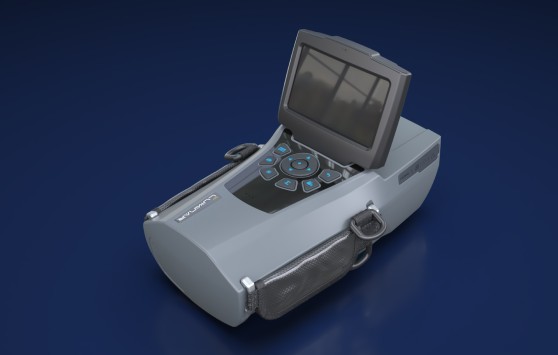
DayCor® Luminar HD Solar Blind UV Camera is a handheld solution specifically designed to detect and pinpoint corona PD and arcing – a major but often unseen hazard to electrical equipment.
DayCor® micROM HD Solar Blind UV Camera is a UAV solution specifically designed to detect and pinpoint corona PD and arcing – a major but often unseen hazard to electrical equipment.
Solar Blind UV Camera is a camera core for OEM integration, specifically designed to detect and pinpoint corona PD – a major but often unseen hazard to electrical equipment.
Gridnostic is OFIL’s smart powerline inspection software, built to turn RGB, thermal and UV (corona discharge) inspection images into clear, actionable insights.
On demand webinar: Precision PD Pinpointing for Quality Excellence
Discover the future of UV based predictive maintenance. Watch the OFIL webinar on pinpointing partial discharge with solar blind UV cameras.
Frequently asked questions
What is a partial discharge camera?
A partial discharge camera, also called a corona camera, is an optical instrument that makes discharge activity visible. It filters out visible and near UV light and captures the narrow UVC band, 240 to 280 nm, that corona emits, then overlays the UV signal on a visible image so inspectors see exactly where the discharge occurs on energized equipment.
Can thermal imaging detect early stage partial discharge?
Often not. Corona discharge is voltage driven and emits ultraviolet light while generating little heat in its early stages. A thermal camera needs sufficient load and measurable heating, which typically appears at a mid to late stage. UV inspection can therefore give earlier visibility into developing defects, and the two technologies are complementary.
Can a camera detect partial discharge in daylight?
Yes. DayCor® cameras are solar blind: they work in the UVC band where atmospheric ozone absorbs sunlight, so the camera is unaffected by solar radiation and shows even faint discharge in full daylight.
How far away can a partial discharge camera detect corona?
Detection distance depends on the camera model, corona intensity, and environmental conditions. Different models can detect corona at distances of up to 200 m.
What types of assets benefit from UV corona inspection?
Polymer, porcelain and glass insulators, corona rings, transformer bushings, conductors and line hardware, switchgear, and the stator windings of rotating machines. Any component exposed to high voltage stress, surface contamination or insulation degradation is a candidate for UV inspection.
Can UAV systems detect corona on transmission lines?
Yes. The DayCor® micROM HD is a UAV mounted solar blind UV camera that integrates with various drone models and gimbals, for aerial inspection of transmission and distribution lines, substations and railway overhead lines.
How is a PD camera different from a PD tester?
Electrical PD testers measure discharge pulses at a connection point and are the most common method for online PD measurement, including internal discharges. A UV camera detects the optical emission of external discharge from a distance, on energized equipment, and pinpoints its exact location. The two are complementary: pinpointing external PD allows targeted intervention.