As grid infrastructure ages and environmental conditions become more challenging, electrical utilities and industrial companies operating substations in polluted environments—such as mines, cement plants, and chemical facilities – face a growing threat: contamination-induced flashovers. These incidents, caused by pollution buildup on insulators, can lead to power outages, costly equipment failures, and even fire hazards.
Despite widespread use of infrared (IR) thermography for condition monitoring, IR alone may not be sufficient for early contamination detection. Ultraviolet (UV) imaging, by contrast, offers a powerful complementary tool, enabling utilities to see what thermal imaging can miss.
The Contamination Challenge
Outdoor insulators are continuously exposed to contaminants like salt, dust, industrial emissions, and agricultural residue. Under humid conditions (fog, dew, drizzle), these pollutants form conductive films across the insulator surface. This can lead to partial discharges and dry band arcing, which may ultimately result in a full flashover.
Major pollution sources include:
- Coastal Pollution: Salt spray and sand contribute to conductivity during high humidity and fog.
- Industrial Pollution: Emissions from industries deposit materials that become conductive when wet.
- Cement plants and rock dust from milling processes.
- Chemical pollutants such as sulfur dioxide, hydrogen sulfide, and nitrogen oxide.


Routine washing and manual inspections are costly, labor-intensive, and often reactive rather than preventative. As utilities transition toward condition-based maintenance, early and accurate detection of contamination becomes critical.
Understanding the Insulator Flashover Process
- A pollution layer accumulates on the insulator
- Under wet conditions, the pollution layer becomes conductive
- Surface leakage current begins to flow, generating heat and partially drying the layer
- Drying causes non-uniform “dry bands” that disrupt the flow of current
- Voltage stress across dry bands causes air breakdown, producing arcs
- Surges occur with each arc over the dry bands.
- If the remaining moist areas have low resistance, arcing continues, resistance drops further, current increases, and a complete insulator flashover occurs

The Solution: UV Cameras for Early Detection
UV cameras are uniquely capable of detecting corona partial discharge and arcing activity that signals contamination and electrical stress.
Key advantages:
- Early Warning of Dry Band Arcing
UV imaging reveals corona discharges triggered by uneven electric fields caused by contamination – an early sign of impending failure.
- Remote and Real-Time Inspection
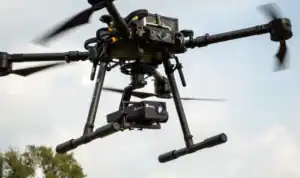
UV cameras enable inspections from a distance using handheld devices, vehicle-mounted units, or drones – without the need to shut down equipment.
Washing Methods and the Role of UV Cameras
Effective maintenance involves both visual assessment and targeted cleaning. Common washing methods include cold washing, typically performed when the system is de-energized, and hot washing, which can be done while the system remains energized.
UV cameras enhance the effectiveness of these methods by supporting inspections before, during, and after the washing process.
Before washing, UV imaging helps identify the specific contaminated areas, allowing maintenance teams to focus only on the affected zones rather than the entire installation. During washing, it enables real-time monitoring to ensure that discharges are being eliminated as cleaning progresses. After washing, UV inspection verifies that all contamination has been successfully removed, and no corona activity remains.
This process ensures efficient cleaning, reduces unnecessary labor and water use, and helps confirm that contamination-related risks have been properly addressed.
Conclusion
UV imaging is no longer optional. As environmental conditions become more extreme and regulatory pressures increase, utilities need better tools to predict and prevent contamination-related failures. UV cameras provide an early warning system that infrared technology cannot, making them indispensable for modern substation and transmission line maintenance.