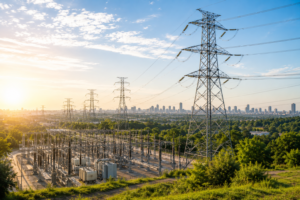
Corona and UV inspection are commonly associated with high-voltage transmission lines. Transmission networks carry large amounts of electricity over long distances, typically at voltages ranging from approximately 69 kV to more than 700 kV.
Distribution networks serve a different purpose. They carry electricity from substations to homes, businesses, industrial facilities, and public infrastructure. Primary distribution systems typically operate between approximately 4 kV and 35 kV before transformers reduce the voltage further for end users.
UV inspection is often overlooked on distribution networks because of the misconception that corona discharge is only relevant at transmission voltages. In practice, distribution assets can develop corona, gap discharge, and arcing due to damaged or contaminated components, inadequate clearances, poor grounding, loose connections, and installation defects. These networks should therefore be included in UV inspection programs, particularly because they operate close to customers and frequently have limited redundancy.
Voltage is only part of the equation
Corona discharge occurs when the electric field around an energized component becomes strong enough to ionize the surrounding air. System voltage affects this process, but it is not the only factor.
A strong electric field can develop locally around sharp edges, damaged conductor strands, contaminated insulators, loose connections, small air gaps, and incorrectly installed hardware. Inadequate grounding, poor bonding, or insufficient spacing between conductors can also create corona, gap discharge, or arcing, even when the system operates far below transmission voltage.
The risk is particularly relevant across distribution networks, where long exposed spans, wooden poles, aging hardware, and components exposed to pollution, moisture, vegetation, and other challenging environmental conditions can increase the likelihood of electrical discharge.
These conditions can progress from localized discharge to insulation damage, carbonization, flashover, fire, equipment failure, or an outage. Routine UV inspection allows utilities to identify and locate this activity while the equipment is energized, supporting corrective maintenance before the condition develops into a larger event.
UV inspection is often overlooked on distribution networks because of the misconception that corona discharge is only relevant at transmission voltages. In practice, distribution assets can develop corona, gap discharge, and arcing due to damaged or contaminated components, inadequate clearances, poor grounding, loose connections, and installation defects. These networks should therefore be included in UV inspection programs, particularly because they operate close to customers and frequently have limited redundancy.
Voltage is only part of the equation
Corona discharge occurs when the electric field around an energized component becomes strong enough to ionize the surrounding air. System voltage affects this process, but it is not the only factor.
A strong electric field can develop locally around sharp edges, damaged conductor strands, contaminated insulators, loose connections, small air gaps, and incorrectly installed hardware. Inadequate grounding, poor bonding, or insufficient spacing between conductors can also create corona, gap discharge, or arcing, even when the system operates far below transmission voltage.
The risk is particularly relevant across distribution networks, where long exposed spans, wooden poles, aging hardware, and components exposed to pollution, moisture, vegetation, and other challenging environmental conditions can increase the likelihood of electrical discharge.
These conditions can progress from localized discharge to insulation damage, carbonization, flashover, fire, equipment failure, or an outage. Routine UV inspection allows utilities to identify and locate this activity while the equipment is energized, supporting corrective maintenance before the condition develops into a larger event.
Distribution is closer to people and sensitive infrastructure
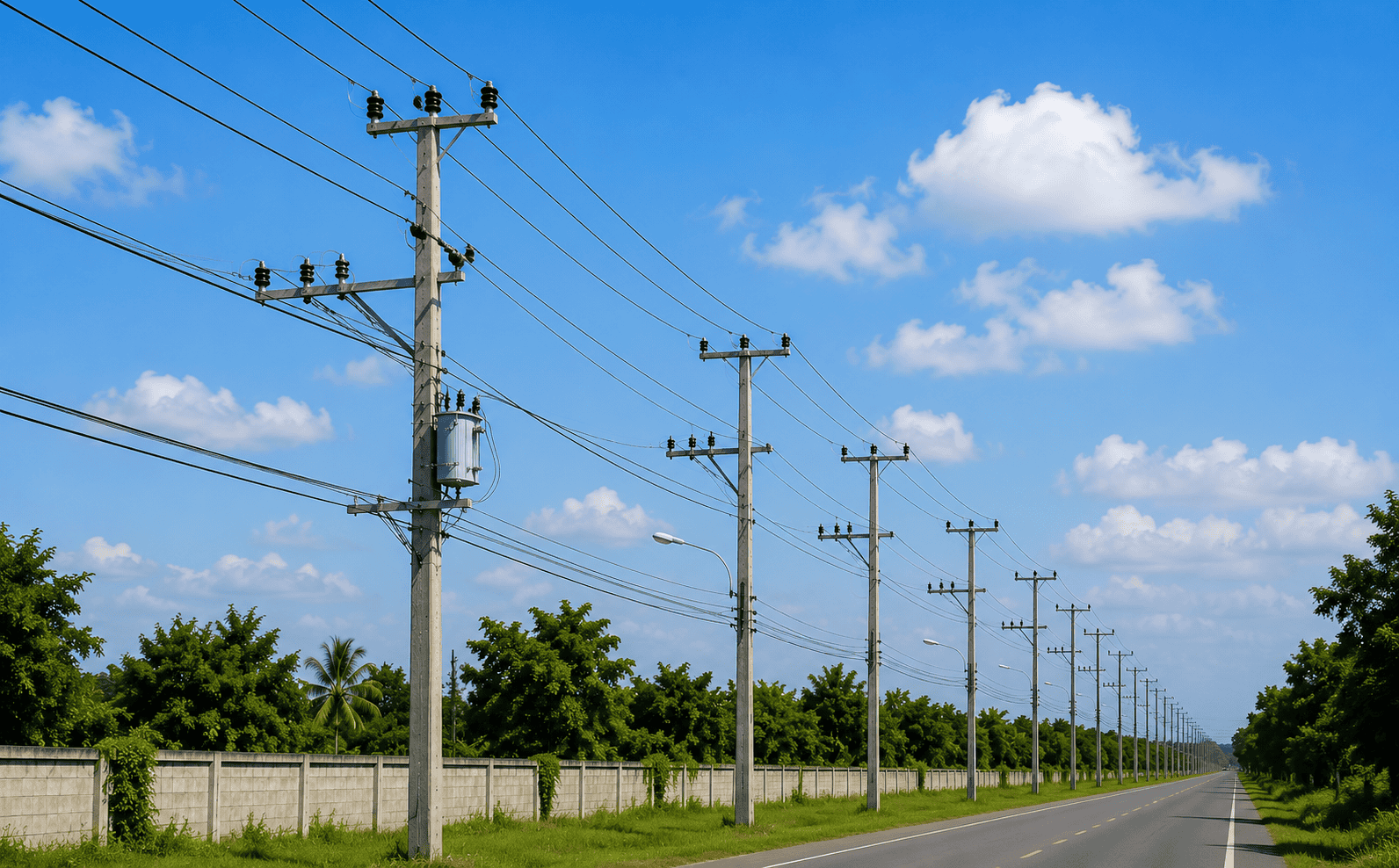
Distribution equipment is installed where people live and work. Lines and components are located beside homes, roads, schools, commercial areas, industrial sites, and public spaces. This makes the consequences of a developing electrical discharge different from those on a remote transmission corridor.
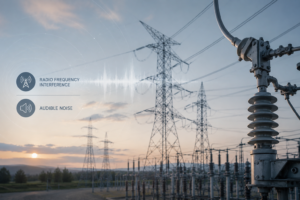
Corona discharge and arcing can produce audible noise that disturbs nearby residents. The same activity can generate radio-frequency interference. Because distribution lines are close to customers and communication infrastructure, this interference may affect radio, television, telecommunications, and other sensitive systems. Near airports or similar facilities, identifying and eliminating potential sources of interference can be particularly important.
Safety is also a greater concern when energized equipment is installed close to pedestrians, vehicles, buildings, and vegetation. A developing discharge on a damaged component or wooden pole is not only a maintenance issue. It may create a risk of fire, falling equipment, public exposure, or a sudden failure in a populated area.
The importance of a distribution anomaly should therefore not be judged only by its voltage or discharge intensity. Its location and potential impact must also be considered.
Less redundancy can mean greater customer impact
Transmission networks are generally designed with multiple paths that allow electricity to be rerouted when a line or component is unavailable. Distribution networks often have fewer alternatives.
In many areas, a neighborhood, commercial district, or critical facility is supplied by a single distribution feeder. If that feeder fails and no practical backup path is available, the customers connected to it lose power until the problem is located, isolated, and repaired.
A relatively small defect can therefore interrupt electricity to hundreds or thousands of customers. The effect may be even more significant when the circuit supplies hospitals, communication facilities, water infrastructure, transportation systems, or industrial operations.
Early detection is particularly valuable under these conditions. Finding an abnormal discharge during a planned UV inspection allows the utility to investigate and schedule corrective action. Discovering the same defect only after failure means responding to an outage, often under greater time pressure and with higher operational and public consequences.
What UV inspection can reveal
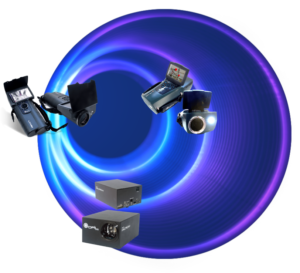
Solar-blind UV cameras detect the ultraviolet emissions generated by corona and arcing and overlay the activity on a visible image. This allows inspectors to locate the source while inspecting energized equipment during daylight.
On distribution networks, UV technology can help identify:
- Damaged or contaminated insulators
- Loose connections and unintended air gaps
- Discharge from switches, cutouts, connectors, and terminations
- Inadequate conductor clearances
- Grounding or bonding problems
- Arcing on or near wooden structures
- Sources of audible noise or radio-frequency interference
RFI investigations demonstrate the value of precise localization. Other methods may indicate that interference is present in the general area, but UV imaging can help identify the specific component producing the discharge. This can shorten the investigation and support focused corrective maintenance.
UV Findings from the Field
Corona Activity on Distribution Insulators
Early detection preventing insulation degradation and unexpected failure.
Periodic UV inspection detected corona discharge at the live end of insulators on two phases, where persistent activity could damage the insulation and its hydrophobic coating and increase the risk of failure in humid or wet conditions.
Early detection enabled the insulators to be replaced during a scheduled outage, reducing the risk of unexpected failure and service interruption.
Hidden Tie-Wire Discharge Detected by UAV
UV inspection reveals an installation defect invisible to visual inspection.
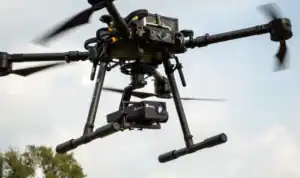
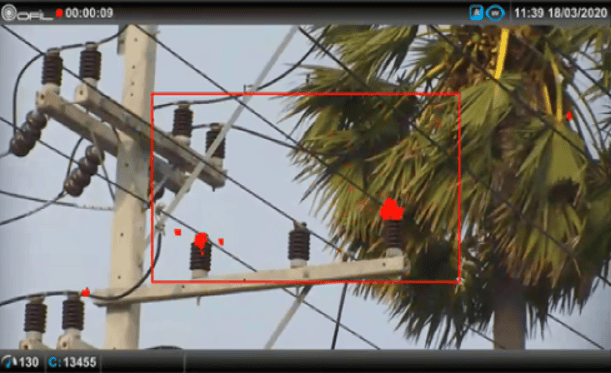
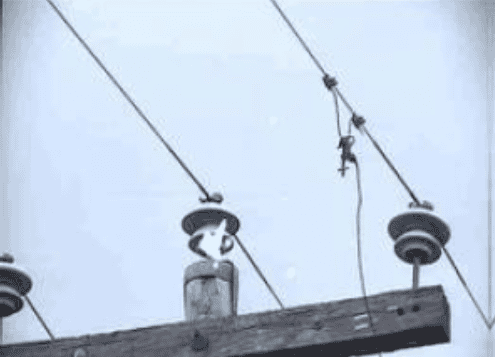
A UAV-mounted UV camera detected corona partial discharge on a tie wire that appeared normal during visual inspection. The discharge was caused by improper installation of the tie wire and was damaging the insulation material.
Critical Insulator Failure & Voltage Leakage
UV detection identifies an immediate safety hazard requiring corrective action.
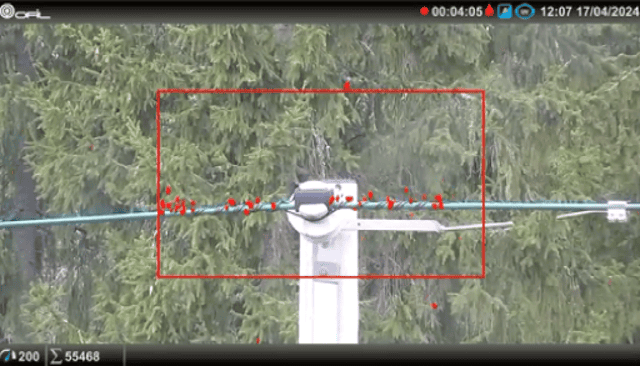
UV inspection detected corona discharge at the dead end of a distribution-line insulator, indicating insulator failure and voltage leakage toward the pole. This presents a serious safety hazard and requires immediate corrective action.
UV complements thermal inspection
Infrared inspection is widely used on distribution systems, but UV and thermal cameras detect different physical phenomena.
Thermal inspection identifies abnormal heating, often caused by excessive resistance, loading, or poor connections. UV inspection identifies ionization and electrical discharge in air. A developing defect may emit UV before it produces a meaningful increase in temperature. Conversely, a thermal anomaly may have no UV signature.
The technologies are therefore complementary rather than interchangeable.
A Smarter Strategy for Distribution Reliability
Not every distribution line requires the same inspection frequency. A targeted, risk-based UV program can prioritize higher-voltage feeders, circuits with recurring faults, aging infrastructure, contaminated environments, wooden structures, tight conductor clearances, RFI or noise complaints, and lines supplying critical or densely populated areas.
Distribution networks are close to people, often have limited redundancy, and directly serve customers and sensitive infrastructure. UV inspection should therefore be included as part of their condition-monitoring strategy, alongside visible and thermal inspection.
The question should not be whether distribution voltage is “high enough” for UV inspection. The better question is whether an undetected discharge could create an outage, safety hazard, noise complaint, interference problem, or fire risk.
In many distribution applications, the answer is clearly yes.