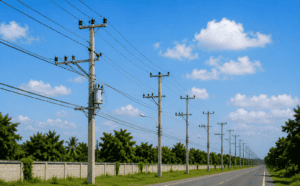
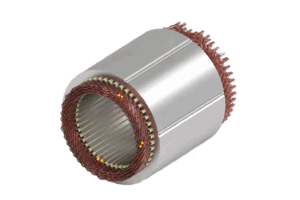
In high-voltage systems—whether overhead lines, substations, switchgear, or rotating machines—partial discharge (PD), and specifically corona discharge, often serves as one of the earliest indicators of insulation degradation. Detecting corona is important, but without knowing exactly where it occurs, the insight has limited operational value. Effective maintenance requires accurate pinpointing of the discharge source to assess risk, determine corrective action, and minimize unnecessary downtime.
Why Precise Pinpointing Is Essential
- Determine Operational Risk: The exact location of corona PD activity directly influences how urgent the response should be. Discharge on an arcing horn or metal fitting may require monitoring, while activity on a bushing interface, or insulator sheath could signal an impending failure that demands immediate attention.
- Enable Focused Maintenance: Identifying the precise component and the specific area affected – such as the top disc of an insulator string or the sealing end of a bushing—allows teams to address the root cause without broad exploratory work. This leads to shorter outages, reduced labor time, and more confident decision-making.
- Enable Trend Analysis: Precisely locating the discharge allows for consistent monitoring of specific fault locations over time, supporting predictive maintenance strategies.
- Avoid Misleading Signals: Many PD detection methods rely on indirect signals that can reflect, couple, or propagate, resulting in uncertainty. Only a direct visual confirmation at the emission site eliminates ambiguity.
True Pinpointing vs. Area-Based Detection
Some technologies offer only regional detection—identifying general zones or components that may be affected, which often still requires a follow-up UV inspection to find the actual fault. In contrast, solar-blind UV cameras detect ultraviolet photons emitted directly from corona activity, delivering spatially precise, real-time imagery that highlights the exact fault location.
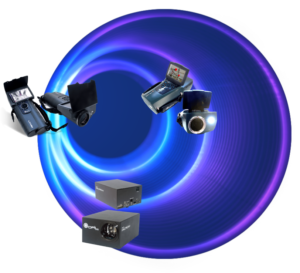
The DayCor® UVollé PD camera is purpose-built for this — a solar-blind UV system that localizes corona sources to within centimeters on energized equipment.
Corona PD on Bushing Seal
Discharge detected around the sealing area of a bushing suggests degradation of the seal. This can allow moisture ingress, increasing the risk of internal failure or flashover.
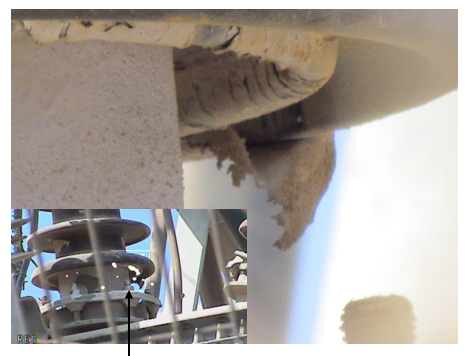
Corona PD on Circuit Breaker Collar
Corona seen around the metal collar of a circuit breaker, especially where the cement has degraded or cracked, points to compromised insulation or poor bonding.
This may lead to further surface erosion or internal partial discharges.

Corona PD on Arcing Horn
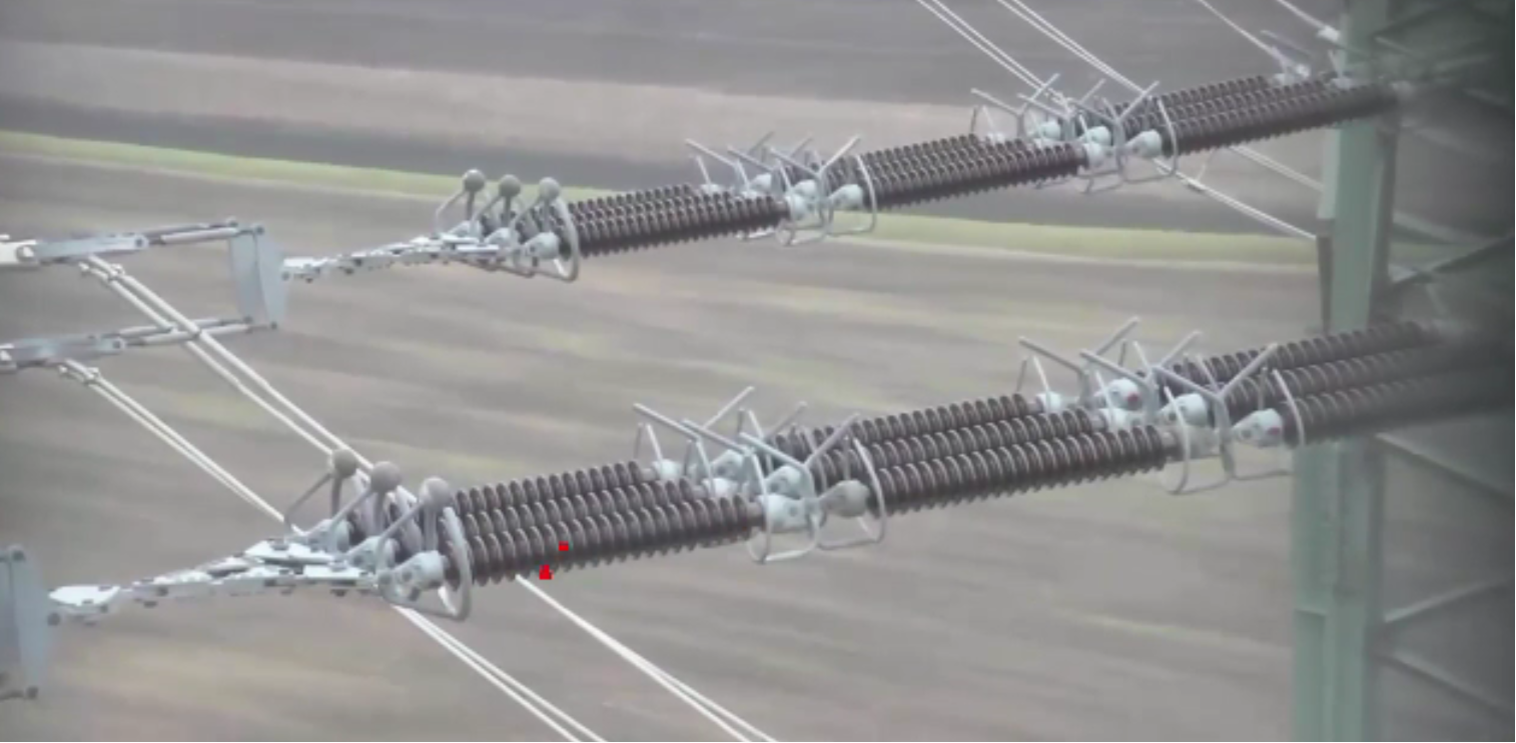
Corona activity on the arcing horn is generally acceptable and does not require intervention. However, if the discharge is detected on the insulator sheath or individual sheds, it may indicate insulation degradation or surface contamination, which can progress into more serious faults if not addressed.

Corona PD on Specific Insulator Sheds
Localized corona discharge on two specific sheds of an insulator highlights early-stage deterioration or contamination.
Conclusion
When every minute of unplanned downtime carries a high price, the ability to accurately pinpoint corona partial discharge makes solar-blind UV cameras indispensable. For utilities, manufacturers, and industrial operators, integrating true pinpointing UV imaging into inspection workflows helps extend asset life, improve system reliability, and optimize resource use.